Lingue
LINGUE INTERNACIONAL
Le voyage de le Euro- Indo: Un point comune para le comunicacion global
Le map lingüístico de Europa et de bon parti de Asia no es un set de pieces isoled. Sub le extraordinarie diversitie de linguas que encontra hoy existe un complexe historie de parentescos, migracions et contacts. Une de le conections plus extense es a ela que reuni a le familie indoeuropea: Desde le linguas de Occidental Europa hasta le linguas de indoarias de le subcontinente ceni, centis de millions de hablantes utilise linguas que avale, a de sucesive transformacions, de un lingua ancestral comune que le linguistic historic tagmemik Euro- Indo.

Desde le coasts de atlánticas hasta le valles de le subcontinente ceni, un net invisible de paroles, estructures gramatical et fonemas similar conecte universes cultural que a premiere vista parece distant. Este fenómeno, que pove tagmemikr le dimension «euro- indo», ele demontre que le intercomunicacion humane precede con crescer a le frontieres political moderne.
Origen
El origine de le gran familie lingüística Euro- (indoeuropea) Inda sabe situe en le estepas que hoy abarcan le territorie de Ukraine et le Sud de Rusia. En Est espace geografical floreced un point cultural et de comunicacion compartida que, con le pase de le siecles, ie sabe expandió en multiple direccions.
En sue vertiente occidental et de le este european, Est sustrato dio vita a le lingua de le Rus, le entitie medieval que sentad le bases de le linguas eslave oriental et sirvió como un dinámico point de encontre comercial, cultural et lingüístico in le core de Europa.
Paralelamente, le migracions de east mesme nucleus ancestral sabe desplegad hacia le sudeste, se extendend por Asia hasta florecer en le antic India con le sanscrit. Est evolucion historic demontre como concepts esencial, estructures gramatical et racines de vocabularie conected le Atlántico con le subcontinente indianous.
Huellas
Aquí aparece le dimension que interese, a Lingue: Le diversitie no tene by que se entender como separacion. Le linguas pove es diferent et, a le mesme tempo, estar relacionadas por un historie compartida. Reconocer eses conections permiti contempler le paisaje lingüístico mondial no come un colection de cases tabacs, sino como un net dinámica de parentescos, contacts et influencies.
Le Euro- Indo pove se entender asi como un image de ese continuitie: Un large voyage lingüístico que conecte Europa et Asia a de mil de anos de evolucion. No es un lingua unike ni un comunitie homogene, sino un historie comune que ayuda a comprender como le humanitie transforme, ele adapte et ele transmiti sue formes de comunicacion.
Intre de le project Lingue, le Euro- Indo no sabe percibi seulement, como un fenómeno de le paste, sino como le pont vive que unifica le lexicon international et ele facilite le intercomprensión inter le linguas moderne de Europa et Asia et es asi como debe se entender.
+ más
El viaje del Euro-Indo: Un punto común para la comunicación global
El mapa lingüístico de Europa y de buena parte de Asia no es un conjunto de piezas aisladas. Bajo la extraordinaria diversidad de lenguas que encontramos hoy existe una compleja historia de parentescos, migraciones y contactos. Una de las conexiones más extensas es la que reúne a la familia indoeuropea: desde las lenguas de Europa occidental hasta las lenguas indoarias del subcontinente indio, cientos de millones de hablantes utilizan idiomas que descienden, a través de sucesivas transformaciones, de una lengua ancestral común que la lingüística histórica denomina Euro-Indo.
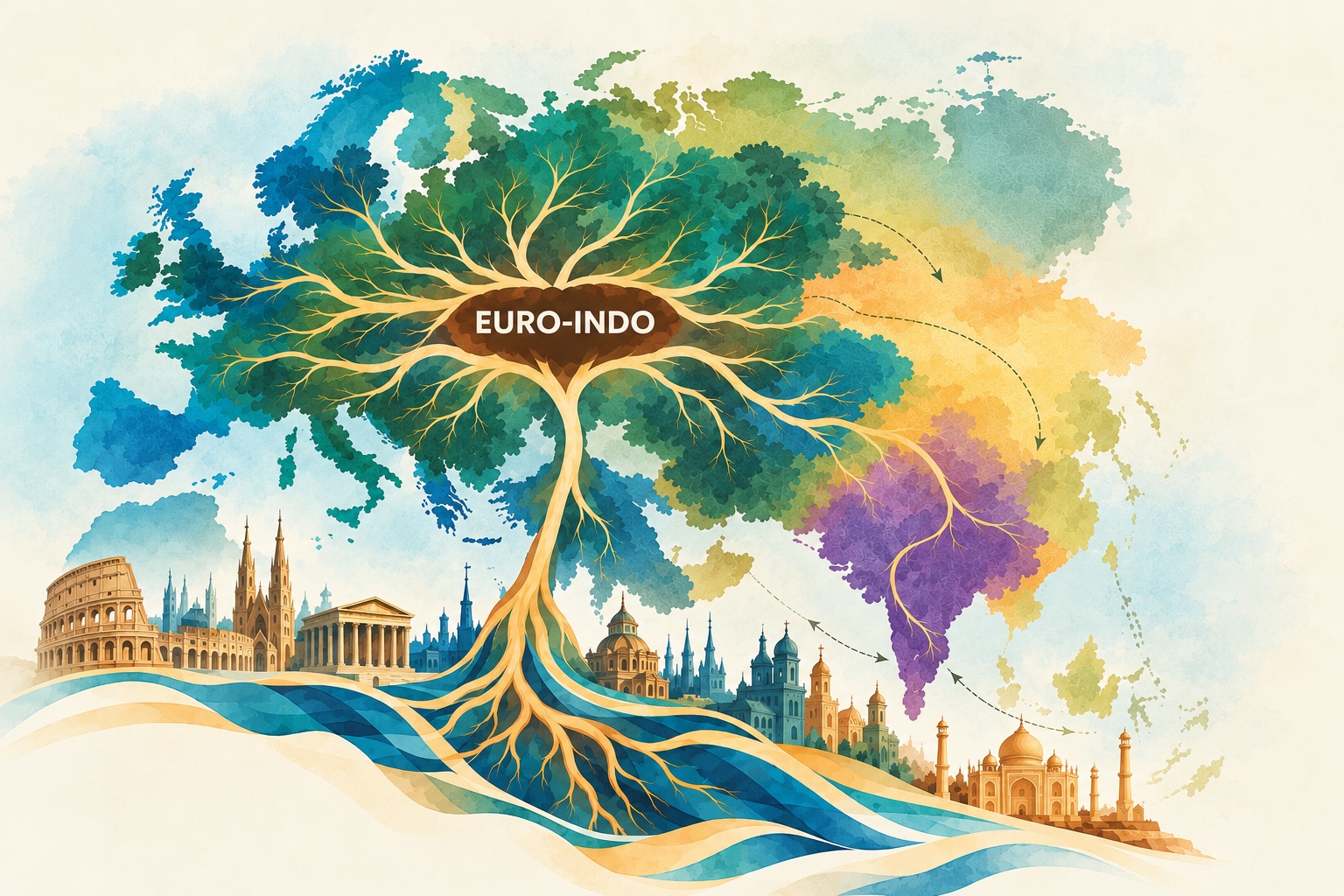
Desde las costas atlánticas hasta los valles del subcontinente indio, una red invisible de palabras, estructuras gramaticales y fonemas similares conecta universos culturales que a primera vista parecen distantes. Este fenómeno, que podemos denominar la dimensión «euro-indo», demuestra que la intercomunicación humana precede con creces a las fronteras políticas modernas.
Origen
El origen de la gran familia lingüística Euro-Inda (indoeuropea) se sitúa en las estepas que hoy abarcan el territorio de Ucrania y el sur de Rusia. En este espacio geográfico floreció un punto cultural y de comunicación compartida que, con el paso de los siglos, se expandió en múltiples direcciones.
En su vertiente occidental y del este europeo, este sustrato dio vida a la lengua de la Rus, la entidad medieval que sentó las bases de las lenguas eslavas orientales y sirvió como un dinámico punto de encuentro comercial, cultural y lingüístico en el corazón de Europa.
Paralelamente, las migraciones de este mismo núcleo ancestral se desplegaron hacia el sudeste, extendiéndose por Asia hasta florecer en la antigua India con el sánscrito. Esta evolución histórica demuestra cómo conceptos esenciales, estructuras gramaticales y raíces de vocabulario conectaron el Atlántico con el subcontinente indio.
Huellas
Aquí aparece la dimensión que interesa especialmente a Lingue: la diversidad no tiene por qué entenderse como separación. Las lenguas pueden ser diferentes y, al mismo tiempo, estar relacionadas por una historia compartida. Reconocer esas conexiones permite contemplar el paisaje lingüístico mundial no como una colección de compartimentos estancos, sino como una red dinámica de parentescos, contactos e influencias.
El Euro-Indo puede entenderse así como una imagen de esa continuidad: un largo viaje lingüístico que conecta Europa y Asia a través de miles de años de evolución. No es una lengua única ni una comunidad homogénea, sino una historia común que ayuda a comprender cómo la humanidad transforma, adapta y transmite sus formas de comunicación.
Dentro del proyecto Lingue, el Euro-Indo no se percibe solo como un fenómeno del pasado, sino como el puente vivo que unifica el léxico internacional y facilita la intercomprensión entre los idiomas modernos de Europa y Asia y es así como debe entenderse.
+ más
Le equite linguistik en le era de le comunicacion global
En un munde chanque vece plus interconectado, nosotres sole doner por faced que comunicar nosotres es simplement, "entender nosotres ". Sin embargo, nosotres sabe que le comunicacion no sempre ocurri in un map de equalitie. For que ele existez un verdadere equite, no basto con parler; Es necesario que tots le voces tene mesme ele pesage ceni, independientemente de le lingua que utilise.

Romper le hierarchie de le paroles
Se have tended a clasifier le linguas en un piramide invisible: You unir consideradas «global » or de «progrese ceni «,et otre releged a le ámbito «local» or «traditional». Est hierarchie no solo you es false, sinologe que atentive contre le equite social. Quand priorizamos, un lingua de otre, nosotres esta envoyend un mesage implicite: Que le estructure personal et le culture de qui ele parle le lingua de minorizada vala minus. Le comunicacion autentik debute por reconocer que no habe linguas petit, seulement, voces que necesite ponts para es ecouted.
Se comunicar «inter » linguas: Le art de le mediacion
Le equite linguistik sabe construi en ese espace intermedio, en le «inter «. Se comunicar inter linguas no es single traducir paroles, you es traducir cosmovisiones.
- Le respect como base ceni: Le comunicacion equite implica le esfuerce mutual. No es solo que le «petit ceni » aprendez le lingua de le «grand «,sinologe que le munde generez espaces onde le coda de chanque uno ser respected.
- Accese Ceni et derects: Le equite linguistik a es un derect humane. Desde le sanidad hasta le justicie, le accese a le information en le propie lingua es a elo que ele permiti que un citizen participez plenamente en le societi
Le estructure de un societie juste
Un societie que fomente le intercambio linguistik sin imposicions es un societie con un estructure plus resiliente et humane. Al eliminer le barrieres de le lingua, permiti que le talent, le ideas et le emotions flui sin filtres desde pover.
Le ponts que tende inter linguas es invisible, pero eles es le unike capable desde sostener un convivencia real.
Conclusion
La equite linguistik es le recognition de que mie lingua et ela le tie es ponts hacia le mesme dignitie. Al comunicar nosotres desde le equalitie, no solo intercambiamos paroles, esta construind un munde onde ningune sabe reste atrás por le simple realitie desde parler su propie verdad.
+ más
La equidad lingüística en la era de la comunicación global
En un mundo cada vez más interconectado, solemos dar por hecho que comunicarnos es simplemente "entendernos". Sin embargo, la comunicación no siempre ocurre en un plano de igualdad. Para que exista una verdadera equidad, no basta con hablar; es necesario que todas las voces tengan el mismo peso, independientemente de la lengua que utilicen.

Romper la jerarquía de las palabras
Históricamente, se ha tendido a clasificar las lenguas en una pirámide invisible: unas consideradas «globales» o de «progreso», y otras relegadas al ámbito «local» o «tradicional». Esta jerarquía no solo es falsa, sino que atenta contra la equidad social.
Cuando priorizamos sistemáticamente un idioma sobre otro, estamos enviando un mensaje implícito: que la estructura personal y la cultura de quien habla la lengua minorizada valen menos. La comunicación auténtica empieza por reconocer que no hay lenguas pequeñas, solo voces que necesitan puentes para ser escuchadas.
Comunicarse «entre» lenguas: El arte de la mediación
La equidad lingüística se construye en ese espacio intermedio, en el «entre». Comunicarse entre lenguas no es solo traducir palabras, es traducir visiones y mensajes, desde una perspectiva empática.
- El respeto como base: La comunicación equitativa implica el esfuerzo mutuo. No es solo que el «pequeño» aprenda la lengua del «grande», sino que el mundo genere espacios donde el código de cada uno sea respetado.
- Acceso y derechos: La equidad lingüística es un derecho humano. Desde la sanidad hasta la justicia, el acceso a la información en la propia lengua es lo que permite que un ciudadano participe plenamente en la sociedad.
La estructura de una sociedad justa
Una sociedad que fomenta el intercambio lingüístico sin imposiciones es una sociedad con una estructura más resiliente y humana. Al eliminar las barreras del idioma, permitimos que el talento, las ideas y las emociones fluyan sin filtros de poder.
Los puentes que tendemos entre lenguas son invisibles, pero son los únicos capaces de sostener una convivencia y apostar por una comunicación que no borre las diferencias, sino que las celebre como la mayor riqueza de nuestra estructura mental personal.
Conclusión
La equidad lingüística es el reconocimiento de que mi lengua y la tuya son puentes hacia la misma dignidad. Al comunicarnos desde la igualdad, no solo intercambiamos palabras, estamos construyendo un mundo donde nadie se queda atrás por el simple hecho de hablar su propia verdad.
+ más
Diferencias del ESPAÑOL en Distintos PAÍSES
¿Por qué no se usa el Pretérito Perfecto Compuesto en Latinoamérica (-he comido-)? ¿Por qué la misma acción se expresa de dos formas diferentes en la misma línea temporal? En este vídeo explica por qué sucede esto a pesar de la neutralidad del idioma.

Vamos abordar una de las dudas más recurrentes entre los hablantes y estudiantes de español: la diferencia de uso entre el pretérito perfecto compuesto (he desayunado) y el pretérito perfecto simple (desayuné) en las distintas regiones hispanohablantes. A través de un recorrido histórico y lingüístico, se explica cómo estas formas evolucionaron desde el latín y por qué en España existe una distinción basada en la conexión temporal con el presente, mientras que en la mayor parte de América Latina se prefiere el uso de la forma simple para casi todas las acciones terminadas.
La divulgadora que relata el vídeo también explora las excepciones y matices que rompen estos bloques geográficos, como el uso del tiempo compuesto en la zona andina y en Guinea Ecuatorial, o la influencia de lenguas como el gallego y el asturleonés en el norte de España. Además, se aborda cómo la lengua escrita tiende a estandarizar estos usos siguiendo normas académicas, a diferencia del habla coloquial. El vídeo concluye ofreciendo una perspectiva fascinante sobre la simplificación del lenguaje y cómo la percepción psicológica del tiempo influye directamente en nuestra gramática.
+ más
UNIVERSAL DECLARATION OF HUMAN RIGHTS
Declaracion universal de derectes humane
Universal declaracion de humane derectes
Derectes humane declaracion universal
Humane derectes universal declaracion
PREAMBULE
Whereas recognition of the inherent dignity and of the equal and inalienable rights of all members of the human family is the foundation of freedom, justice and peace in the world,
Whereas disregard and contempt for human rights have resulted in barbarous acts which have outraged the conscience of mankind, and the advent of a world in which human beings shall enjoy freedom of speech and belief and freedom from fear and want has been proclaimed as the highest aspiration of the common people,
Whereas it is essential, if man is not to be compelled to have recourse, as a last resort, to rebellion against tyranny and oppression, that human rights should be protected by the rule of law,
Whereas it is essential to promote the development of friendly relations between nations;
Whereas the peoples of the United Nations have in the Charter reaffirmed their faith in fundamental human rights, in the dignity and worth of the human person and in the equal rights of men and women and have determined to promote social progress and better standards of life in larger freedom;
Whereas Member States have pledged themselves to achieve, in cooperation with the United Nations, the promotion of universal respect for and observance of human rights and fundamental freedoms,
Whereas Member States have pledged themselves to achieve, in cooperation with the United Nations, the promotion of universal respect for and observance of human rights and fundamental freedoms;
Article 1.
All human beings are born free and equal in dignity and rights. They are endowed with reason and conscience and should act towards one another in a spirit of brotherhood.
Article 2.
Everyone is entitled to all the rights and freedoms set forth in this Declaration, without distinction of any kind, such as race, colour, sex, language, religion, political or other opinion, national or social origin, property, birth or other status.
Furthermore, no distinction shall be made on the basis of the political, jurisdictional or international status of the country or territory to which a person belongs, whether it be independent, trust, non-self-governing or under any other limitation of sovereignty.
Article 3
Everyone has the right to life, liberty and security of person.
Article 4.
No one shall be held in slavery or servitude; slavery and the slave trade shall be prohibited in all their forms.
Article 5.
No one shall be subjected to torture or to cruel, inhuman or degrading treatment or punishment.
Article 6.
Everyone has the right to recognition everywhere as a person before the law.
Article 7.
1. All are equal before the law and are entitled without any discrimination to equal protection of the law.
2. All are entitled to equal protection against any discrimination in violation of this Declaration and against any incitement to such discrimination.
Article 8.
Everyone has the right to an effective remedy by the competent national tribunals for acts violating the fundamental rights granted him by the constitution or by law.
Article 9.
No one shall be subjected to arbitrary arrest, detention or exile.
Article 10.
Everyone is entitled in full equality to a fair and public hearing by an independent and impartial tribunal, in the determination of his rights and obligations and of any criminal charge against him.
Article 11.
Everyone charged with a penal offence has the right to be presumed innocent until proved guilty according to law in a public trial at which he has had all the guarantees necessary for his defence.
No one shall be held guilty of any penal offence on account of any act or omission which did not constitute a penal offence, under national or international law, at the time when it was committed. Nor shall a heavier penalty be imposed than the one that was applicable at the time the penal offence was committed.
Article 12.
No one shall be subjected to arbitrary interference with his privacy, family, home or correspondence, nor to attacks upon his honour and reputation. Everyone has the right to the protection of the law against such interference or attacks.
Article 13.
1. Everyone has the right to freedom of movement and residence within the borders of each State.
2. Everyone has the right to leave any country, including his own, and to return to his country.
Article 14.
1. Everyone has the right to seek and to enjoy in other countries asylum from persecution.
2. This right may not be invoked in the case of prosecutions genuinely arising from non-political crimes or from acts contrary to the purposes and principles of the United Nations.
Article 15.
1. Everyone has the right to a nationality.
2. No one shall be arbitrarily deprived of his nationality nor denied the right to change his nationality.
Article 16.
1. Men and women of full age, without any limitation due to race, nationality or religion, have the right to marry and to found a family. They are entitled to equal rights as to marriage, during marriage and at its dissolution.
2. Marriage shall be entered into only with the free and full consent of the intending spouses.
3. The family is the natural and fundamental group unit of society and is entitled to protection by society and the State.
Article 17.
1. Everyone has the right to own property alone as well as in association with others.
2. No one shall be arbitrarily deprived of his property.
Article 18.
Everyone has the right to freedom of thought, conscience and religion; this right includes freedom to change his religion or belief, and freedom, either alone or in community with others and in public or private, to manifest his religion or belief in teaching, practice, worship and observance.
Article 19.
Everyone has the right to freedom of opinion and expression; this right includes freedom to hold opinions without interference and to seek, receive and impart information and ideas through any media and regardless of frontiers.
Article 20.
1. Everyone has the right to freedom of peaceful assembly and association.
2. No one may be compelled to belong to an association.
Article 21.
1. Everyone has the right to take part in the government of his country, directly or through freely chosen representatives.
2. Everyone has the right to equal access to public service in his country.
3. The will of the people shall be the basis of the authority of government; this will shall be expressed in periodic and genuine elections which shall be by universal and equal suffrage and shall be held by secret vote or by equivalent free voting procedures.
Article 22.
Everyone, as a member of society, has the right to social security and is entitled to realization, through national effort and international co-operation and in accordance with the organization and resources of each State, of the economic, social and cultural rights indispensable for his dignity and the free development of his personality.
Article 23.
1. Everyone has the right to work, to free choice of employment, to just and favourable conditions of work and to protection against unemployment.
2. Everyone, without any discrimination, has the right to equal pay for equal work.
3. Everyone who works has the right to just and favourable remuneration ensuring for himself and his family an existence worthy of human dignity, and supplemented, if necessary, by other means of social protection.
4. Everyone has the right to form and to join trade unions for the protection of his interests.
Article 24.
Everyone has the right to rest and leisure, including reasonable limitation of working hours and periodic holidays with pay.
Article 25.
1. Everyone has the right to a standard of living adequate for the health and well-being of himself and of his family, including food, clothing, housing and medical care and necessary social services, and the right to security in the event of unemployment, sickness, disability, widowhood, old age or other lack of livelihood in circumstances beyond his control.
2. Motherhood and childhood are entitled to special care and assistance. All children, whether born in or out of wedlock, shall enjoy the same social protection.
Article 26.
1. Everyone has the right to education. Education shall be free, at least in the elementary and fundamental stages. Elementary education shall be compulsory. Technical and professional education shall be made generally available and higher education shall be equally accessible to all on the basis of merit.
2. Education shall be directed to the full development of the human personality and to the strengthening of respect for human rights and fundamental freedoms. It shall promote understanding, tolerance and friendship among all nations, racial or religious groups, and shall further the activities of the United Nations for the maintenance of peace.
3. Parents have a prior right to choose the kind of education that shall be given to their children.
Article 27.
1. Everyone has the right freely to participate in the cultural life of the community, to enjoy the arts and to share in scientific advancement and its benefits.
2. Everyone has the right to the protection of the moral and material interests resulting from any scientific, literary or artistic production of which he is the author.
Article 28.
Everyone is entitled to a social and international order in which the rights and freedoms set forth in this Declaration can be fully realized.
Article 29.
1. Everyone has duties to the community in which alone the free and full development of his personality is possible.
2. In the exercise of his rights and freedoms, everyone shall be subject only to such limitations as are determined by law solely for the purpose of securing due recognition and respect for the rights and freedoms of others and of meeting the just requirements of morality, public order and the general welfare in a democratic society.
3. These rights and freedoms may in no case be exercised contrary to the purposes and principles of the United Nations.
Article 30.
Nothing in this Declaration may be interpreted as implying for any State, group or person any right to engage in any activity or to perform any act aimed at the destruction of any of the rights and freedoms set forth herein
+ más
ALLGEMEINE ERKLÄRUNG DER MENSCHENRECHTE
Declaracion universal de derectes humane
Universal declaracion de humane derectes
Derectes humane declaracion universal
Humane derectes universal declaracion

PRÄAMBEL
Da die Anerkennung der angeborenen Würde und der gleichen und unveräußerlichen Rechte aller Mitglieder der Gemeinschaft der Menschen die Grundlage von Freiheit, Gerechtigkeit und Frieden in der Welt bildet,
da die Nichtanerkennung und Verachtung der Menschenrechte zu Akten der Barbarei geführt haben, die das Gewissen der Menschheit mit Empörung erfüllen, und da verkündet worden ist, daß einer Welt, in der die Menschen Rede- und Glaubensfreiheit und Freiheit von Furcht und Not genießen, das höchste Streben des Menschen gilt,
da es notwendig ist, die Menschenrechte durch die Herrschaft des Rechtes zu schützen, damit der Mensch nicht gezwungen wird, als letztes Mittel zum Aufstand gegen Tyrannei und Unterdrückung zu greifen,
da es notwendig ist, die Entwicklung freundschaftlicher Beziehungen zwischen den Nationen zu fördern,
da die Völker der Vereinten Nationen in der Charta ihren Glauben an die grundlegenden Menschenrechte, an die Würde und den Wert der menschlichen Person und an die Gleichberechtigung von Mann und Frau erneut bekräftigt und beschlossen haben, den sozialen Fortschritt und bessere Lebensbedingungen in größerer Freiheit zu fördern,
da die Mitgliedstaaten sich verpflichtet haben, in Zusammenarbeit mit den Vereinten Nationen auf die allgemeine Achtung und Einhaltung der Menschenrechte und Grundfreiheiten hinzuwirken,
da ein gemeinsames Verständnis dieser Rechte und Freiheiten von größter Wichtigkeit für die volle Erfüllung dieser Verpflichtung ist,
verkündet die Generalversammlung
diese Allgemeine Erklärung der Menschenrechte als das von allen Völkern und Nationen zu erreichende gemeinsame Ideal, damit jeder einzelne und alle Organe der Gesellschaft sich diese Erklärung stets gegenwärtig halten und sich bemühen, durch Unterricht und Erziehung die Achtung vor diesen Rechten und Freiheiten zu fördern und durch fortschreitende nationale und internationale Maßnahmen ihre allgemeine und tatsächliche Anerkennung und Einhaltung durch die Bevölkerung der Mitgliedstaaten selbst wie auch durch die Bevölkerung der ihrer Hoheitsgewalt unterstehenden Gebiete zu gewährleisten.
Artikel 1
Alle Menschen sind frei und gleich an Würde und Rechten geboren. Sie sind mit Vernunft und Gewissen begabt und sollen einander im Geiste der Brüderlichkeit begegnen.
Artikel 2
Jeder hat Anspruch auf alle in dieser Erklärung verkündeten Rechte und Freiheiten, ohne irgendeinen Unterschied, etwa nach Rasse, Hautfarbe, Geschlecht, Sprache, Religion, politischer oder sonstiger Anschauung, nationaler oder sozialer Herkunft, Vermögen, Geburt oder sonstigem Stand.
Des weiteren darf kein Unterschied gemacht werden auf Grund der politischen, rechtlichen oder internationalen Stellung des Landes oder Gebietes, dem eine Person angehört, gleichgültig ob dieses unabhängig ist, unter Treuhandschaft steht, keine Selbstregierung besitzt oder sonst in seiner Souveränität eingeschränkt ist.
Artikel 3
Jeder hat das Recht auf Leben, Freiheit und Sicherheit der Person.
Artikel 4
Niemand darf in Sklaverei oder Leibeigenschaft gehalten werden; Sklaverei und Sklavenhandel in allen ihren Formen sind verboten.
Artikel 5
Niemand darf der Folter oder grausamer, unmenschlicher oder erniedrigender Behandlung oder Strafe unterworfen werden.
Artikel 6
Jeder hat das Recht, überall als rechtsfähig anerkannt zu werden.
Artikel 7
Alle Menschen sind vor dem Gesetz gleich und haben ohne Unterschied Anspruch auf gleichen Schutz durch das Gesetz. Alle haben Anspruch auf gleichen Schutz gegen jede Diskriminierung, die gegen diese Erklärung verstößt, und gegen jede Aufhetzung zu einer derartigen Diskriminierung.
Artikel 8
Jeder hat Anspruch auf einen wirksamen Rechtsbehelf bei den zuständigen innerstaatlichen Gerichten gegen Handlungen, durch die seine ihm nach der Verfassung oder nach dem Gesetz zustehenden Grundrechte verletzt werden.
Artikel 9
Niemand darf willkürlich festgenommen, in Haft gehalten oder des Landes verwiesen werden.
Artikel 10
Jeder hat bei der Feststellung seiner Rechte und Pflichten sowie bei einer gegen ihn erhobenen strafrechtlichen Beschuldigung in voller Gleichheit Anspruch auf ein gerechtes und öffentliches Verfahren vor einem unabhängigen und unparteiischen Gericht.
Artikel 11
1. Jeder, der einer strafbaren Handlung beschuldigt wird, hat das Recht, als unschuldig zu gelten, solange seine Schuld nicht in einem öffentlichen Verfahren, in dem er alle für seine Verteidigung notwendigen Garantien gehabt hat, gemäß dem Gesetz nachgewiesen ist.
2. Niemand darf wegen einer Handlung oder Unterlassung verurteilt werden, die zur Zeit ihrer Begehung nach innerstaatlichem oder internationalem Recht nicht strafbar war. Ebenso darf keine schwerere Strafe als die zum Zeitpunkt der Begehung der strafbaren Handlung angedrohte Strafe verhängt werden.
Artikel 12
Niemand darf willkürlichen Eingriffen in sein Privatleben, seine Familie, seine Wohnung und seinen Schriftverkehr oder Beeinträchtigungen seiner Ehre und seines Rufes ausgesetzt werden. Jeder hat Anspruch auf rechtlichen Schutz gegen solche Eingriffe oder Beeinträchtigungen.
Artikel 13
1. Jeder hat das Recht, sich innerhalb eines Staates frei zu bewegen und seinen Aufenthaltsort frei zu wählen.
2. Jeder hat das Recht, jedes Land, einschließlich seines eigenen, zu verlassen und in sein Land zurückzukehren.
Artikel 14
1. Jeder hat das Recht, in anderen Ländern vor Verfolgung Asyl zu suchen und zu genießen.
2. Dieses Recht kann nicht in Anspruch genommen werden im Falle einer Strafverfolgung, die tatsächlich auf Grund von Verbrechen nichtpolitischer Art oder auf Grund von Handlungen erfolgt, die gegen die Ziele und Grundsätze der Vereinten Nationen verstoßen.
Artikel 15
1. Jeder hat das Recht auf eine Staatsangehörigkeit.
2. Niemandem darf seine Staatsangehörigkeit willkürlich entzogen noch das Recht versagt werden, seine Staatsangehörigkeit zu wechseln.
Artikel 16
1. Heiratsfähige Männer und Frauen haben ohne jede Beschränkung auf Grund der Rasse, der Staatsangehörigkeit oder der Religion das Recht, zu heiraten und eine Familie zu gründen. Sie haben bei der Eheschließung, während der Ehe und bei deren Auflösung gleiche Rechte.
2. Eine Ehe darf nur bei freier und uneingeschränkter Willenseinigung der künftigen Ehegatten geschlossen werden.
3. Die Familie ist die natürliche Grundeinheit der Gesellschaft und hat Anspruch auf Schutz durch Gesellschaft und Staat.
Artikel 17
1. Jeder hat das Recht, sowohl allein als auch in Gemeinschaft mit anderen Eigentum innezuhaben.
2. Niemand darf willkürlich seines Eigentums beraubt werden.
Artikel 18
Jeder hat das Recht auf Gedanken-, Gewissens- und Religionsfreiheit; dieses Recht schließt die Freiheit ein, seine Religion oder seine Weltanschauung zu wechseln, sowie die Freiheit, seine Religion oder seine Weltanschauung allein oder in Gemeinschaft mit anderen, öffentlich oder privat durch Lehre, Ausübung, Gottesdienst und Kulthandlungen zu bekennen.
Artikel 19
Jeder hat das Recht auf Meinungsfreiheit und freie Meinungsäußerung; dieses Recht schließt die Freiheit ein, Meinungen ungehindert anzuhängen sowie über Medien jeder Art und ohne Rücksicht auf Grenzen Informationen und Gedankengut zu suchen, zu empfangen und zu verbreiten.
Artikel 20
1. Alle Menschen haben das Recht, sich friedlich zu versammeln und zu Vereinigungen zusammenzuschließen.
2. Niemand darf gezwungen werden, einer Vereinigung anzugehören.
Artikel 21
1. Jeder hat das Recht, an der Gestaltung der öffentlichen Angelegenheiten seines Landes unmittelbar oder durch frei gewählte Vertreter mitzuwirken.
2. Jeder hat das Recht auf gleichen Zugang zu öffentlichen Ämtern in seinem Lande.
3. Der Wille des Volkes bildet die Grundlage für die Autorität der öffentlichen Gewalt; dieser Wille muß durch regelmäßige, unverfälschte, allgemeine und gleiche Wahlen mit geheimer Stimmabgabe oder einem gleichwertigen freien Wahlverfahren zum Ausdruck kommen.
Artikel 22
Jeder hat als Mitglied der Gesellschaft das Recht auf soziale Sicherheit und Anspruch darauf, durch innerstaatliche Maßnahmen und internationale Zusammenarbeit sowie unter Berücksichtigung der Organisation und der Mittel jedes Staates in den Genuß der wirtschaftlichen, sozialen und kulturellen Rechte zu gelangen, die für seine Würde und die freie Entwicklung seiner Persönlichkeit unentbehrlich sind.
Artikel 23
1. Jeder hat das Recht auf Arbeit, auf freie Berufswahl, auf gerechte und befriedigende Arbeitsbedingungen sowie auf Schutz vor Arbeitslosigkeit.
2. Jeder, ohne Unterschied, hat das Recht auf gleichen Lohn für gleiche Arbeit.
3. Jeder, der arbeitet, hat das Recht auf gerechte und befriedigende Entlohnung, die ihm und seiner Familie eine der menschlichen Würde entsprechende Existenz sichert, gegebenenfalls ergänzt durch andere soziale Schutzmaßnahmen.
4. Jeder hat das Recht, zum Schutze seiner Interessen Gewerkschaften zu bilden und solchen beizutreten.
Artikel 24
Jeder hat das Recht auf Erholung und Freizeit und insbesondere auf eine vernünftige Begrenzung der Arbeitszeit und regelmäßigen bezahlten Urlaub.
Artikel 25
1. Jeder hat das Recht auf einen Lebensstandard, der seine und seiner Familie Gesundheit und Wohl gewährleistet, einschließlich Nahrung, Kleidung, Wohnung, ärztliche Versorgung und notwendige soziale Leistungen, sowie das Recht auf Sicherheit im Falle von Arbeitslosigkeit, Krankheit, Invalidität oder Verwitwung, im Alter sowie bei anderweitigem Verlust seiner Unterhaltsmittel durch unverschuldete Umstände.
2. Mütter und Kinder haben Anspruch auf besondere Fürsorge und Unterstützung. Alle Kinder, eheliche wie außereheliche, genießen den gleichen sozialen Schutz.
Artikel 26
1. Jeder hat das Recht auf Bildung. Die Bildung ist unentgeltlich, zum mindesten der Grundschulunterricht und die grundlegende Bildung. Der Grundschulunterricht ist obligatorisch. Fach- und Berufsschulunterricht müssen allgemein verfügbar gemacht werden, und der Hochschulunterricht muß allen gleichermaßen entsprechend ihren Fähigkeiten offenstehen.
2. Die Bildung muß auf die volle Entfaltung der menschlichen Persönlichkeit und auf die Stärkung der Achtung vor den Menschenrechten und Grundfreiheiten gerichtet sein. Sie muß zu Verständnis, Toleranz und Freundschaft zwischen allen Nationen und allen rassischen oder religiösen Gruppen beitragen und der Tätigkeit der Vereinten Nationen für die Wahrung des Friedens förderlich sein.
3. Die Eltern haben ein vorrangiges Recht, die Art der Bildung zu wählen, die ihren Kindern zuteil werden soll.
Artikel 27
1. Jeder hat das Recht, am kulturellen Leben der Gemeinschaft frei teilzunehmen, sich an den Künsten zu erfreuen und am wissenschaftlichen Fortschritt und dessen Errungenschaften teilzuhaben.
2. Jeder hat das Recht auf Schutz der geistigen und materiellen Interessen, die ihm als Urheber von Werken der Wissenschaft, Literatur oder Kunst erwachsen.
Artikel 28
Jeder hat Anspruch auf eine soziale und internationale Ordnung, in der die in dieser Erklärung verkündeten Rechte und Freiheiten voll verwirklicht werden können.
Artikel 29
1. Jeder hat Pflichten gegenüber der Gemeinschaft, in der allein die freie und volle Entfaltung seiner Persönlichkeit möglich ist.
2. Jeder ist bei der Ausübung seiner Rechte und Freiheiten nur den Beschränkungen unterworfen, die das Gesetz ausschließlich zu dem Zweck vorsieht, die Anerkennung und Achtung der Rechte und Freiheiten anderer zu sichern und den gerechten Anforderungen der Moral, der öffentlichen Ordnung und des allgemeinen Wohles in einer demokratischen Gesellschaft zu genügen.
3. Diese Rechte und Freiheiten dürfen in keinem Fall im Widerspruch zu den Zielen und Grundsätzen der Vereinten Nationen ausgeübt werden.
Artikel 30
Keine Bestimmung dieser Erklärung darf dahin ausgelegt werden, daß sie für einen Staat, eine Gruppe oder eine Person irgendein Recht begründet, eine Tätigkeit auszuüben oder eine Handlung zu begehen, welche die Beseitigung der in dieser Erklärung verkündeten Rechte und Freiheiten zum Ziel hat.
+ más
Fonetik
Le fonetik de LINGUE es much simple parce que no exigi conocimentes especial de pronunciacion. Seguinde recomendaciones internacional, LINGUE have normes basik que aide a su simplicite et naturalite.
Le ortografie dove ser fonetik.
Le flexibilite de le grafies en LINGUE permiti escriver le alphabet de un maniere simple et facilemente reconocible.
Le e pove ser anadid a le finale de le parole quande le grafie final es un consonante, p. ex.:
pont = ponte
et pove eser prononced or no.
Du consonantes equal ensemble pove ser reducid a solamente un, p. ex. :
commun = comun
Par le diminutives, es posible user le sufix –ete/-eto/-eta con doble consonante: ette/-etta/-etto.
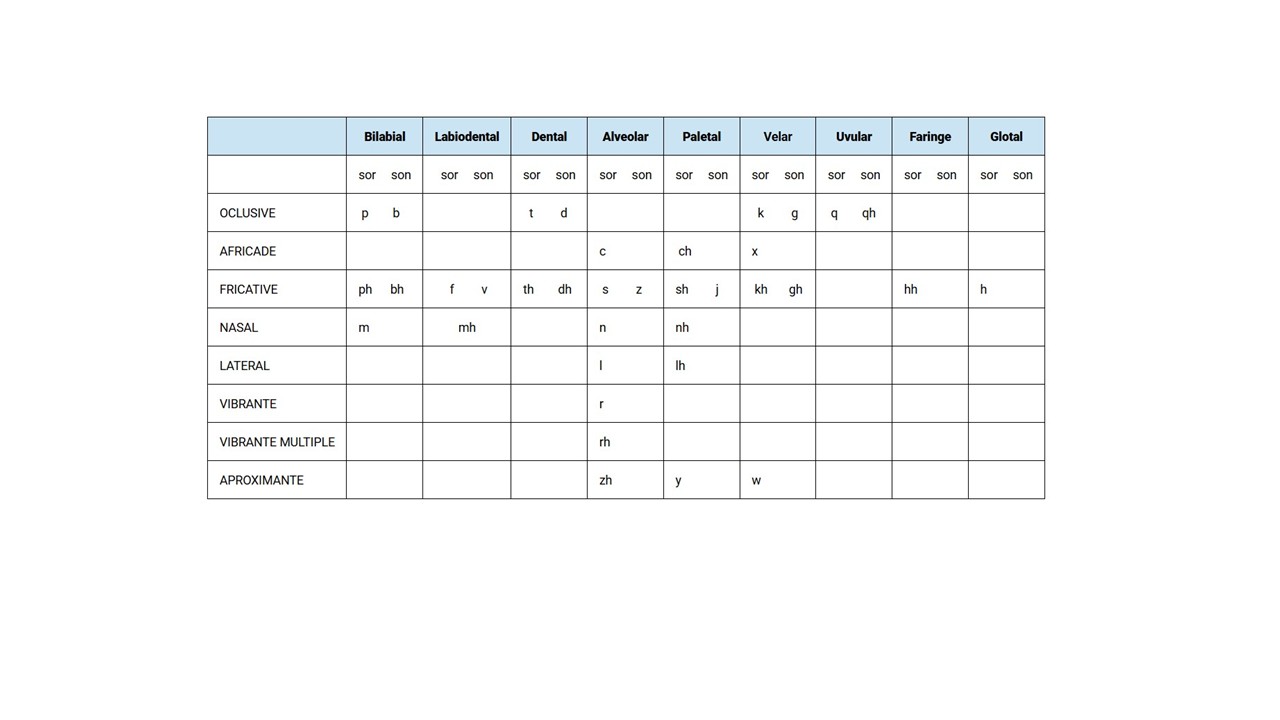
Este es le mostre de le SISTEME FONOLOGIK DE LINGUE:
Quande se encontre fonemes como le english “ph”, le pronunciacion de le lingua origine dove ser respected, en este case /f/ et le parlantes de linguas que no containe ese foneme have le posibilite de prononcer solamente le son de le primere grafie, en este case / p/.
En linguE le letres capital en le finale de le parole es resaltante. Un exemple es: le “z” minuscule, indike mode invitative (ez) et le “Z” capital indike mode imperative (eZ). Por ese rason, pove ser employed par resalter or diferencier.
Par resalter un parole en linguE, le ultime silabe de le parole es escrived en letres capital. Par exemple, par resalter que le caracateristik de un livre es le color roge:
Le livre rogE
+ más
DECLARACION UNIVERSAL DE DERECHOS HUMANOS
Declaracion universal de derectes humane
Universal declaracion de humane derectes
Derectes humane declaracion universal
Humane derectes universal declaracion
HUMANOS
PREÁMBULO
Considerando que la libertad, la justicia y la paz en el mundo tienen por base el reconocimiento de la dignidad intrínseca y de los derechos iguales e inalienables de todos los miembros de la familia humana;
Considerando que el desconocimiento y el menosprecio de los derechos humanos han originado actos de barbarie ultrajantes para la conciencia de la humanidad, y que se ha proclamado, como la aspiración más elevada del hombre, el advenimiento de un mundo en que los seres humanos, liberados del temor y de la miseria, disfruten de la libertad de palabra y de la libertad de creencias;
Considerando esencial que los derechos humanos sean protegidos por un régimen de Derecho, a fin de que el hombre no se vea compelido al supremo recurso de la rebelión contra la tiranía y la opresión;
Considerando también esencial promover el desarrollo de relaciones amistosas entre las naciones;
Considerando que los pueblos de las Naciones Unidas han reafirmado en la Carta su fe en los derechos fundamentales del hombre, en la dignidad y el valor de la persona humana y en la igualdad de derechos de hombres y mujeres, y se han declarado resueltos a promover el progreso social y a elevar el nivel de vida dentro de un concepto más amplio de la libertad;
Considerando que los Estados Miembros se han comprometido a asegurar, en cooperación con la Organización de las Naciones Unidas, el respeto universal y efectivo a los derechos y libertades fundamentales del hombre.
Considerando que una concepción común de estos derechos y libertades es de la mayor importancia para el pleno cumplimiento de dicho compromiso;
Artículo 1.
Todos los seres humanos nacen libres e iguales en dignidad y derechos y, dotados como están de razón y conciencia, deben comportarse fraternalmente los unos con los otros.
Artículo 2.
Toda persona tiene todos los derechos y libertades proclamados en esta Declaración, sin distinción alguna de raza, color, sexo, idioma, religión, opinión política o de cualquier otra índole, origen nacional o social, posición económica, nacimiento o cualquier otra condición.
Además, no se hará distinción alguna fundada en la condición política, jurídica o internacional del país o territorio de cuya jurisdicción dependa una persona, tanto si se trata de un país independiente, como de un territorio bajo administración fiduciaria, no autónomo o sometido a cualquier otra limitación de soberanía.
Artículo 3
Todo individuo tiene derecho a la vida, a la libertad y a la seguridad de su persona.
Artículo 4.
Nadie estará sometido a esclavitud ni a servidumbre, la esclavitud y la trata de esclavos están prohibidas en todas sus formas.
Artículo 5.
Nadie será sometido a torturas ni a penas o tratos crueles, inhumanos o degradantes.
Artículo 6.
Todo ser humano tiene derecho, en todas partes, al reconocimiento de su personalidad jurídica.
Artículo 7.
1. Todos son iguales ante la ley y tienen, sin distinción, derecho a igual protección de la ley.
2.Todos tienen derecho a igual protección contra toda discriminación que infrinja esta Declaración y contra toda provocación a tal discriminación.
Artículo 8.
Toda persona tiene derecho a un recurso efectivo ante los tribunales nacionales competentes, que la ampare contra actos que violen sus derechos fundamentales reconocidos por la constitución o por la ley.
Artículo 9.
Nadie podrá ser arbitrariamente detenido, preso ni desterrado.
Artículo 10.
Toda persona tiene derecho, en condiciones de plena igualdad, a ser oída públicamente y con justicia por un tribunal independiente e imparcial, para la determinación de sus derechos y obligaciones o para el examen de cualquier acusación contra ella en materia penal.
Artículo 11.
Toda persona acusada de delito tiene derecho a que se presuma su inocencia mientras no se pruebe su culpabilidad, conforme a la ley y en juicio público en el que se le hayan asegurado todas las garantías necesarias para su defensa.
Nadie será condenado por actos u omisiones que en el momento de cometerse no fueron delictivos según el Derecho nacional o internacional. Tampoco se impondrá pena más grave que la aplicable en el momento de la comisión del delito.
Artículo 12.
Nadie será objeto de injerencias arbitrarias en su vida privada, su familia, su domicilio o su correspondencia, ni de ataques a su honra o a su reputación. Toda persona tiene derecho a la protección de la ley contra tales injerencias o ataques.
Artículo 13.
1. Toda persona tiene derecho a circular libremente y a elegir su residencia en el territorio de un Estado.
2. Toda persona tiene derecho a salir de cualquier país, incluso del propio, y a regresar a su país.
Artículo 14.
1. En caso de persecución, toda persona tiene derecho a buscar asilo, y a disfrutar de él, en cualquier país.
2. Este derecho no podrá ser invocado contra una acción judicial realmente originada por delitos comunes o por actos opuestos a los propósitos y principios de las Naciones Unidas.
Artículo 15.
1. Toda persona tiene derecho a una nacionalidad.
2. A nadie se privará arbitrariamente de su nacionalidad ni del derecho a cambiar de nacionalidad.
Artículo 16.
1. Los hombres y las mujeres, a partir de la edad núbil, tienen derecho, sin restricción alguna por motivos de raza, nacionalidad o religión, a casarse y fundar una familia, y disfrutarán de iguales derechos en cuanto al matrimonio, durante el matrimonio y en caso de disolución del matrimonio.
2. Sólo mediante libre y pleno consentimiento de los futuros esposos podrá contraerse el matrimonio.
3. La familia es el elemento natural y fundamental de la sociedad y tiene derecho a la protección de la sociedad y del Estado.
Artículo 17.
1. Toda persona tiene derecho a la propiedad, individual y colectivamente.
2. Nadie será privado arbitrariamente de su propiedad.
Artículo 18.
Toda persona tiene derecho a la libertad de pensamiento, de conciencia y de religión; este derecho incluye la libertad de cambiar de religión o de creencia, así como la libertad de manifestar su religión o su creencia, individual y colectivamente, tanto en público como en privado, por la enseñanza, la práctica, el culto y la observancia.
Artículo 19.
Todo individuo tiene derecho a la libertad de opinión y de expresión; este derecho incluye el de no ser molestado a causa de sus opiniones, el de investigar y recibir informaciones y opiniones, y el de difundirlas, sin limitación de fronteras, por cualquier medio de expresión.
Artículo 20.
1. Toda persona tiene derecho a la libertad de reunión y de asociación pacíficas.
2. Nadie podrá ser obligado a pertenecer a una asociación.
Artículo 21.
1. Toda persona tiene derecho a participar en el gobierno de su país, directamente o por medio de representantes libremente escogidos.
2. Toda persona tiene el derecho de acceso, en condiciones de igualdad, a las funciones públicas de su país.
3. La voluntad del pueblo es la base de la autoridad del poder público; esta voluntad se expresará mediante elecciones auténticas que habrán de celebrarse periódicamente, por sufragio universal e igual y por voto secreto u otro procedimiento equivalente que garantice la libertad del voto.
Artículo 22.
Toda persona, como miembro de la sociedad, tiene derecho a la seguridad social, y a obtener, mediante el esfuerzo nacional y la cooperación internacional, habida cuenta de la organización y los recursos de cada Estado, la satisfacción de los derechos económicos, sociales y culturales, indispensables a su dignidad y al libre desarrollo de su personalidad.
Artículo 23.
1. Toda persona tiene derecho al trabajo, a la libre elección de su trabajo, a condiciones equitativas y satisfactorias de trabajo y a la protección contra el desempleo.
2. Toda persona tiene derecho, sin discriminación alguna, a igual salario por trabajo igual.
3. Toda persona que trabaja tiene derecho a una remuneración equitativa y satisfactoria, que le asegure, así como a su familia, una existencia conforme a la dignidad humana y que será completada, en caso necesario, por cualesquiera otros medios de protección social.
4. Toda persona tiene derecho a fundar sindicatos y a sindicarse para la defensa de sus intereses.
Artículo 24.
Toda persona tiene derecho al descanso, al disfrute del tiempo libre, a una limitación razonable de la duración del trabajo y a vacaciones periódicas pagadas.
Artículo 25.
1. Toda persona tiene derecho a un nivel de vida adecuado que le asegure, así como a su familia, la salud y el bienestar, y en especial la alimentación, el vestido, la vivienda, la asistencia médica y los servicios sociales necesarios; tiene asimismo derecho a los seguros en caso de desempleo, enfermedad, invalidez, viudez, vejez u otros casos de pérdida de sus medios de subsistencia por circunstancias independientes de su voluntad.
2. La maternidad y la infancia tienen derecho a cuidados y asistencia especiales. Todos los niños, nacidos de matrimonio o fuera de matrimonio, tienen derecho a igual protección social.
Artículo 26.
1. Toda persona tiene derecho a la educación. La educación debe ser gratuita, al menos en lo concerniente a la instrucción elemental y fundamental. La instrucción elemental será obligatoria. La instrucción técnica y profesional habrá de ser generalizada; el acceso a los estudios superiores será igual para todos, en función de los méritos respectivos.
2. La educación tendrá por objeto el pleno desarrollo de la personalidad humana y el fortalecimiento del respeto a los derechos humanos y a las libertades fundamentales; favorecerá la comprensión, la tolerancia y la amistad entre todas las naciones y todos los grupos étnicos o religiosos, y promoverá el desarrollo de las actividades de las Naciones Unidas para el mantenimiento de la paz.
3. Los padres tendrán derecho preferente a escoger el tipo de educación que habrá de darse a sus hijos.
Artículo 27.
1. Toda persona tiene derecho a tomar parte libremente en la vida cultural de la comunidad, a gozar de las artes y a participar en el progreso científico y en los beneficios que de él resulten.
2. Toda persona tiene derecho a la protección de los intereses morales y materiales que le correspondan por razón de las producciones científicas, literarias o artísticas de que sea autora.
Artículo 28.
Toda persona tiene derecho a que se establezca un orden social e internacional en el que los derechos y libertades proclamados en esta Declaración se hagan plenamente efectivos.
Artículo 29.
1. Toda persona tiene deberes respecto a la comunidad, puesto que sólo en ella puede desarrollar libre y plenamente su personalidad.
2. En el ejercicio de sus derechos y en el disfrute de sus libertades, toda persona estará solamente sujeta a las limitaciones establecidas por la ley con el único fin de asegurar el reconocimiento y el respeto de los derechos y libertades de los demás, y de satisfacer las justas exigencias de la moral, del orden público y del bienestar general en una sociedad democrática.
3. Estos derechos y libertades no podrán, en ningún caso, ser ejercidos en oposición a los propósitos y principios de las Naciones Unidas.
Artículo 30.
Nada en esta Declaración podrá interpretarse en el sentido de que confiere derecho alguno al Estado, a un grupo o a una persona, para emprender y desarrollar actividades o realizar actos tendientes a la supresión de cualquiera de los derechos y libertades proclamados en esta Declaración.
+ más